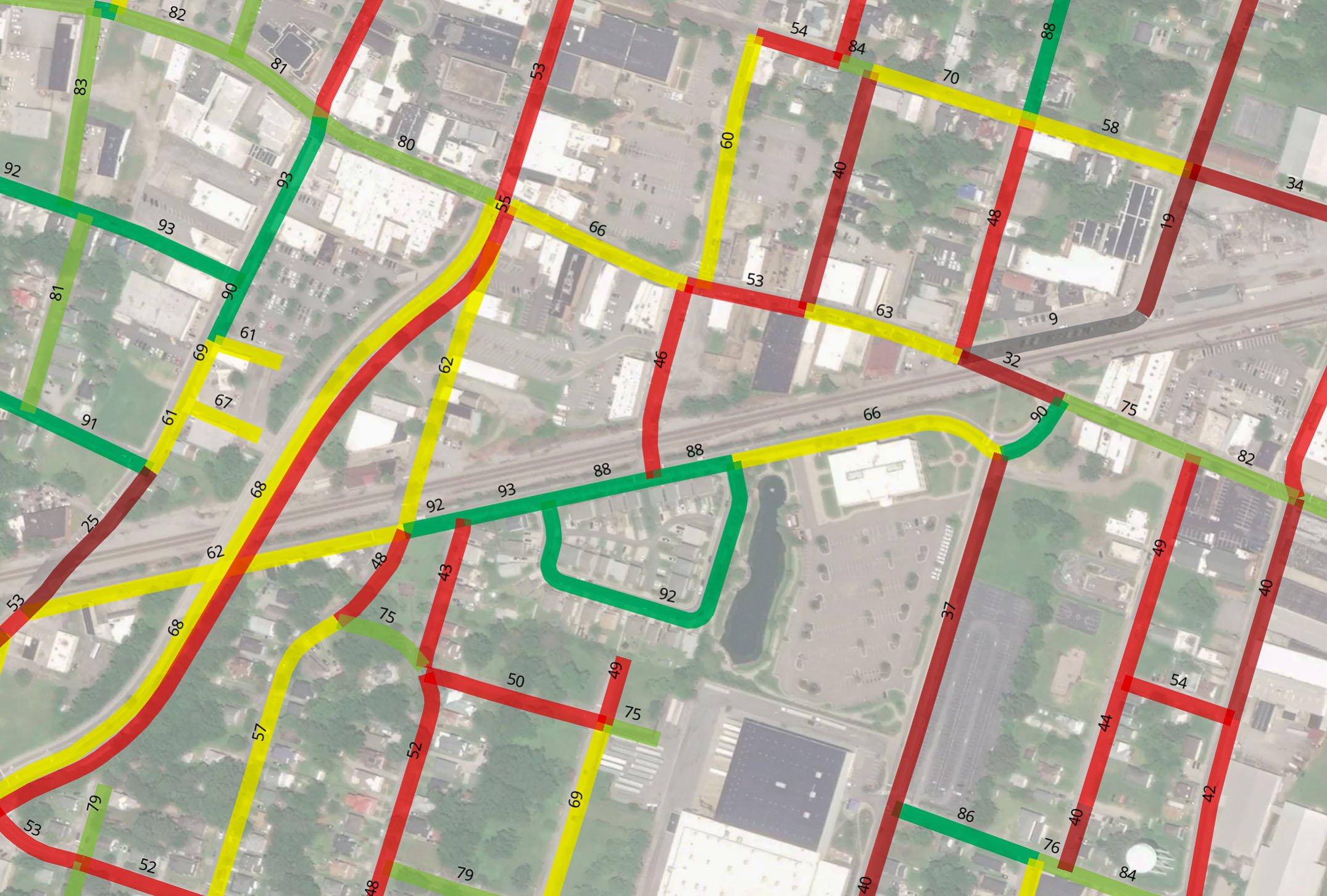
Surface distress analysis is “the tail that wags the dog” when you are implementing a pavement management system. This method records the cracks in the road surface and evaluates the condition of your street network based on the severity and type of cracks found during the survey.
For most urban street networks, consisting of mostly secondary streets with speed limits of 25 – 35 mph, surface distress data are the most important input to your pavement management system. On primary roads and collectors surface distress analysis may be enhanced by sensors that capture rut and ride.
Surface distress information is the input for most pavement management systems, such as MicroPAVER™ and StreetSaver™, to calculate the pavement condition index (PCI).
Field Data Collection with Mobile Mapping System
Surface distress analysis starts with field data collection using Transmap’s ON-SIGHT™ mobile mapping system. We drive the van along all streets of your network in both directions and capture 360º digital, high resolution images of the street surface and right-of-way. The survey data are linked to GPS and correlate to your road center-lines map.
The video below shows the quality and high resolution of digital HD cameras used for Transmap’s roadway condition surveys.
Detailed Surface Distress Analysis
Once field data collection has been completed, the HD images are analyzed by pavement engineers in our office. They will rate the pavement condition of your street surface using the digital, HD images and capture the type of distress, the size and its severity using standard protocols agreed upon with our customer.
Transmap’s approach guarantees a high degree of repeatability, objectivity and reliability.
To complete the analysis of the surface cracks the data captured by Transmap’s staff is entered into MicroPAVER™ (or a software of your choice) to compute the pavement condition index (PCI) for each street segment.
Surface Distress Reports and Budget Plans
The most important part of any pavement management project are the reports that represent the current condition of your street network and the rehabilitation plan and budget that will help you improve your roads for the least amount of money.
Reports and plan can be delivered as printed maps showing the surface conditions in different colors (such as the map below), or in digital form, as GIS files you can immediately use in your office.
We can help you prepare different rehabilitation scenarios to present to your commissioners, and develop budget plans customized to your specific requirements.