
Pavement Management System Deep Dive: StreetSaver
A Deep Dive into StreetSaver
Pavement management systems (PMS) play a critical role in helping agencies make smarter infrastructure decisions.
By combining pavement condition data, maintenance planning, and budget forecasting, PMS platforms enable municipalities to prioritize repairs, extend pavement life, and maximize (often limited) funding. Among the leading platforms is StreetSaver, a flexible pavement management system designed to support data-driven roadway planning and long-term asset management.
At Transmap, we work closely with agencies using StreetSaver to improve the accuracy and effectiveness of their pavement management programs. Through comprehensive data collection, condition analysis, and implementation support and training, Transmap helps municipalities turn pavement data into actionable maintenance strategies that support safer, more sustainable roadway networks.
In this blog, we’ll explore StreetSaver, its history, how it works, and some of the key benefits and drawbacks of implementing StreetSaver as your pavement management solution.
StreetSaver: A Quick Overview
The StreetSaver pavement management system was designed to help agencies manage roadway assets, prioritize maintenance, and plan long-term infrastructure investments more effectively. Built to support cities, counties, metropolitan planning organizations (MPOs), and public works departments, the platform uses pavement condition data and lifecycle analysis to guide maintenance decisions and budget allocations.
A key focus of the platform is pavement preservation. Rather than relying on costly reactive repairs, StreetSaver helps agencies identify the right treatments at the right time, extending pavement life while reducing maintenance costs. This proactive approach allows organizations to maximize limited funding and improve the condition of their pavement networks over time.
Who Uses StreetSaver?
StreetSaver is widely used by local governments, transportation agencies, MPOs, and public works departments looking for a practical, data-driven approach to asset management. Agencies often rely on StreetSaver to support informed decisions on their infrastructure strategy.
The History of StreetSaver
StreetSaver was originally designed and developed by the Metropolitan Transportation Commission in California as a practical pavement management solution for local agencies. The goal was to provide municipalities and public works departments with a more effective way to track pavement conditions, plan maintenance, and make informed budget decisions. By focusing on preventative maintenance and long-term planning, StreetSaver helped agencies move away from reactive repairs and toward more sustainable asset management strategies.
Growth and Adoption
Over time, StreetSaver expanded beyond California and was adopted by agencies across the United States. Its ability to support data-driven maintenance planning made it a valuable tool for cities, counties, MPOs, and transportation organizations looking to maximize infrastructure funding and improve roadway conditions.
As pavement management technology has evolved, StreetSaver has continued to modernize alongside it. The platform has adapted to integrate with newer pavement data collection methods, GIS mapping tools, and digital inspection technologies, allowing agencies to build more accurate and efficient pavement management programs.
How StreetSaver Works
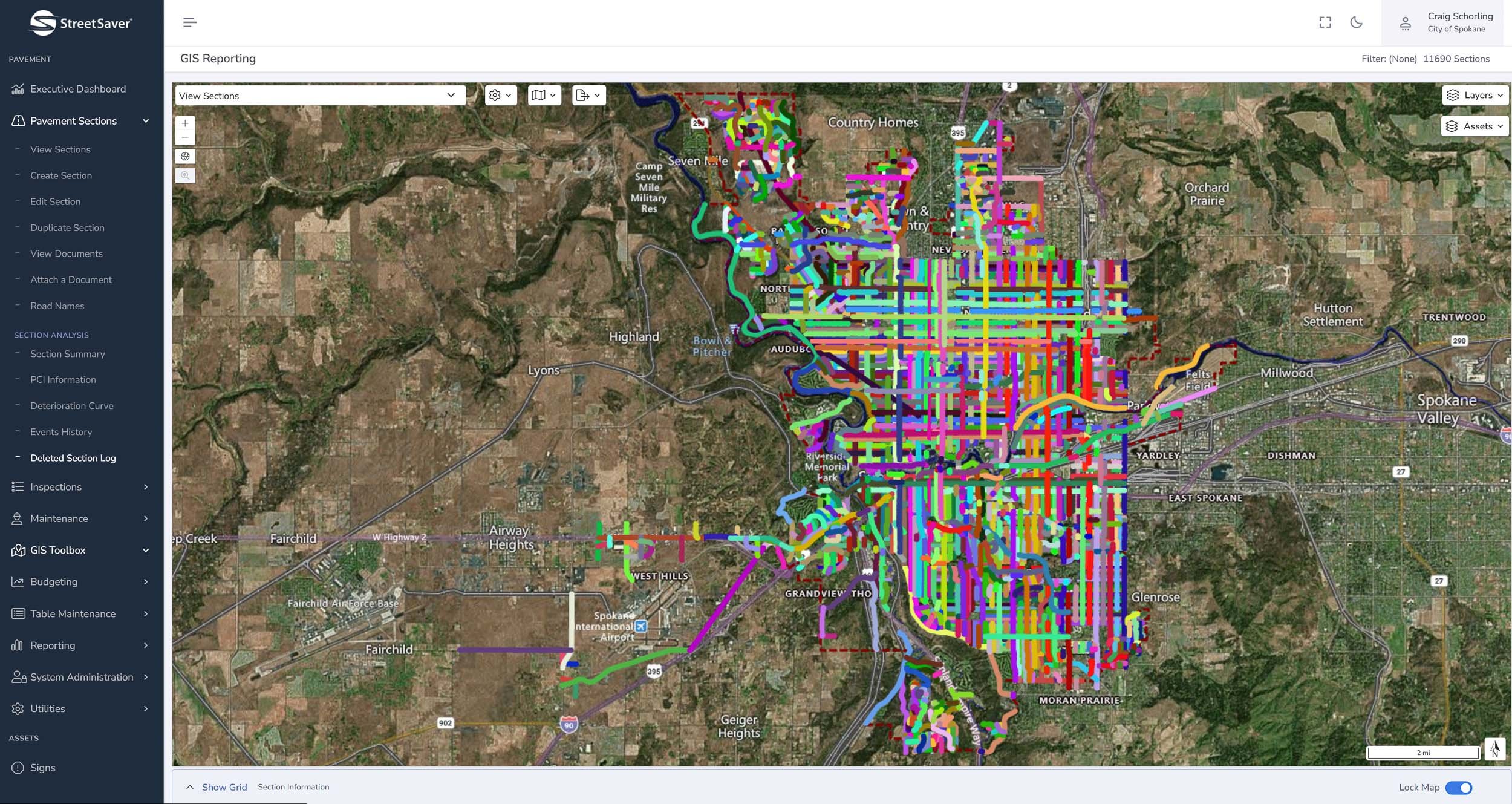
StreetSaver starts with data collected through roadway inspections and surveys. Agencies gather information on surface distress, ride quality, and overall pavement performance to create an accurate picture of network conditions. StreetSaver uses the Pavement Condition Index (PCI) methodology and can integrate with GIS mapping systems and roadway inventory data for improved organization and visualization.
Analysis and Forecasting
Once data is loaded into StreetSaver, it uses predictive modeling to evaluate pavement condition and deterioration and forecast future roadway conditions. The program helps agencies identify cost-effective maintenance and rehabilitation strategies before problems become critical. Budget forecasting and scenario-planning tools enable agencies to compare funding strategies and assess the long-term impact of infrastructure investments.
Reporting and Decision Support
The platform provides dashboards, reports, and visualization tools to help agencies assess and communicate pavement conditions and maintenance priorities more effectively. By balancing roadway condition (PCI), risk, and available funding, StreetSaver supports more informed decision-making for public works teams, stakeholders, and elected officials.
StreetSaver: Key Features
One of the platform's core strengths is its proactive focus on preventative maintenance and pavement preservation. Instead of waiting for roads to fail, StreetSaver helps agencies identify maintenance needs early, allowing them to apply the right treatment at the right time to extend pavement lifecycles and reduce long-term repair costs. This proactive approach supports more sustainable infrastructure management and better use of public funding.
• Budget Optimization Tools – StreetSaver includes a suite of forecasting and scenario planning tools that help agencies evaluate funding strategies and prioritize investments. By analyzing various budget levels and maintenance approaches, organizations can better understand the long-term impact of infrastructure decisions and develop more cost-effective improvement plans.
• GIS and Asset Integration – The platform offers and supports GIS mapping and roadway visualization capabilities. These features make it easier for agencies to organize, analyze, and communicate pavement data. Integration with roadway inventories, databases, and asset management systems helps to create a more connected infrastructure management process.
• Multi-Agency Collaboration – The platform supports collaboration between MPOs, counties, and local agencies by providing standardized condition assessment methods and shared reporting tools. This consistency helps regional organizations coordinate planning efforts and improve decision-making across multiple departments.
The Benefits of Using StreetSaver
StreetSaver is widely recognized for its accessibility and ease of use, especially for municipalities and smaller public agencies. The platform is designed around practical pavement management workflows, making it easier for public works teams to organize roadway data, evaluate pavement conditions, and plan maintenance activities without requiring overly complex systems or processes.
By supporting preservation-focused strategies, StreetSaver helps extend pavement lifecycles, reduce long-term rehabilitation costs, and improve overall roadway conditions. This proactive approach leads to significant cost savings over time while helping agencies maximize limited infrastructure budgets.
StreetSaver has been used by agencies and municipalities for many years, giving it a strong reputation within the industry. Its established methodologies and long-term use across public agencies provide organizations with a trusted framework for condition assessment, maintenance planning, and asset management.
Agencies can evaluate multiple funding scenarios, identify the most cost-effective maintenance strategies, and justify infrastructure investment more clearly. These planning functions support better long-term decision-making and help agencies to build more sustainable pavement management programs.
Challenges and Limitations
StreetSaver offers strong pavement management capabilities; however, agencies may encounter some limitations depending on their operational needs and technical resources. One common challenge some agencies find is customization. Agencies that have highly specific workflows or reporting requirements may find that tailoring the platform to fit unique processes can require additional time, training, and technical support.
Like most pavement management systems, StreetSaver is heavily dependent on high-quality data. Inaccurate or outdated pavement condition data can reduce the reliability of maintenance recommendations, budget forecasts, and long-term planning results. Consistent data collection and regular updates are essential for maintaining optimal system performance.
Some agencies may also experience a learning curve when using advanced features such as scenario modeling, forecasting tools, and detailed reporting. While the platform is generally user-friendly, fully leveraging its capabilities often requires training and experience.
Integration can also be a consideration. Agencies working with multiple asset management systems, GIS platforms, or roadway databases may need additional coordination to ensure smooth data sharing and compatibility across technologies.
How Transmap Supports StreetSaver Users
Successfully using StreetSaver depends on having accurate pavement data, reliable system integration, and a clear long-term management strategy. Transmap helps agencies maximize the value of StreetSaver by providing the services and technical support needed to build stronger pavement management programs.
High-Quality Pavement Data Collection
A key element of user support is high-quality pavement data collection. Transmap works with agencies to collect detailed roadway condition and asset information using proven inspection methods and cutting-edge data collection technologies. Accurate data improves the reliability of StreetSaver’s forecasting, maintenance recommendations, and budget planning capabilities.
GIS and Asset Management Integration
Transmap also works with agencies to integrate GIS and asset management data. We help agencies connect StreetSaver with roadway inventories, mapping systems, and other infrastructure management tools. This creates a more unified view of roadway assets and supports better organization, analysis, and decision-making across multiple departments.
Strategic Planning Support
Beyond data collection and integration, Transmap provides strategic planning and implementation support. From pavement condition analysis to maintenance prioritization and long-term budgeting strategies, Transmap helps agencies turn pavement data into actionable infrastructure plans. By combining technical expertise with practical pavement management experience, Transmap helps municipalities and public works departments get the most out of their investment in StreetSaver.
Is StreetSaver Right for Your Agency?
StreetSaver can be a strong fit for agencies looking for a practical, data-driven approach to pavement management and long-term infrastructure planning. Its focus on preventative maintenance, budget forecasting, and roadway preservation makes it especially valuable for cities, counties, MPOs, and public works departments that want to maximize limited funding while improving pavement conditions over time.
If your agency is looking for an established pavement management platform with proven methodologies and strong planning capabilities, StreetSaver is a reliable solution. The platform is particularly effective for organizations that prioritize long-term asset management and need tools for maintenance prioritization, scenario analysis, and funding justification.
However, like any other pavement management platform, StreetSaver depends on the quality of data, consistency of inspections, and the agency’s ability to integrate pavement management into broader infrastructure planning efforts. Agencies considering StreetSaver should evaluate their internal resources, data collection processes, and long-term operational goals before implementation.
Working with an experienced pavement management partner can also make a significant difference. Transmap helps agencies successfully implement and utilize StreetSaver. With the right data and support structure in place, StreetSaver can become a valuable tool for building more proactive and cost-effective roadway management programs.
Conclusion
StreetSaver has established itself as a practical and widely adopted pavement management system for local agencies, public works departments, and transportation organizations. Its focus on preventative maintenance, budget forecasting, and long-term asset management helps agencies make more informed infrastructure decisions while maximizing limited funding resources.
Like any pavement management platform, StreetSaver has both strengths and limitations. Its proven methodologies, user-friendly approach, and planning capabilities make it a strong option for many agencies, while considerations like data quality, system integration, and advanced feature training remain important factors for successful implementation. Ultimately, the effectiveness of any PMS platform depends on the accuracy of pavement data and the agency’s ability to turn that information into actionable maintenance strategies.
That is where experienced support becomes critical. Transmap helps agencies maximize the value of StreetSaver through reliable pavement data collection, GIS and asset management integration, training, and strategic infrastructure planning support. By combining accurate data with long-term planning expertise, agencies can build more proactive, cost-effective pavement management programs that support safer and more sustainable roadway networks.
Transmap is a nationwide provider of professional pavement, roadway, and asset management support services to cities, counties, and municipalities. Using our advanced technologies, we provide excellent customer service and robust analysis. We are dedicated to maintaining this high standard of data quality while also reducing data collection costs for our clients. To learn more or for StreetSaver client references, please contact us or call our main office in Columbus, OH, at (614) 810–1235.