Pavement Management System Deep Dive: PAVER/MicroPAVER
Diving into PAVER, The Grandfather of Pavement Management Software
Choosing the right pavement management software is a critical step in building a successful infrastructure management program.
Pavement management systems (PMS) play a crucial role in helping agencies make smarter, data-based infrastructure decisions. By organizing pavement condition data, forecasting maintenance needs, and supporting long-term budgeting, PMS platforms allow agencies and public works teams to move from reactive repairs to proactive planning. As roadway networks age and budgets remain limited, effective pavement management has become more important than ever.
One of the oldest and leading PMS platforms is PAVER, with its Windows-based version, MicroPAVER. Widely used by municipalities, airports, military installations, and universities, PAVER has built a reputation for providing a data-driven, structured approach to pavement preservation and asset management.
In this blog, we’ll look at the history of PAVER, how it works, and some of the key benefits and drawbacks of implementing a PAVER-based pavement management solution.
The History of PAVER/MicroPAVER
PAVER was originally developed in the late 1970s by the U.S. Army Corps of Engineers to better manage the condition and maintenance of military airfields and road networks. At the time, agencies needed a more consistent, data-driven method for evaluating pavement conditions and prioritizing repairs. PAVER introduced a standardized approach that helped transform pavement management from reactive maintenance into long-term infrastructure planning.
One of PAVER’s most significant contributions was the development of the Pavement Condition Index (PCI). This is a numerical rating system that is used to accurately assess pavement health. The PCI methodology quickly became an industry standard and remains the most widely used today across municipalities, airports, universities, and transportation agencies.
As technology evolved (like many military technologies), PAVER expanded into the public sector. The introduction of Windows-based MicroPAVER brought the platform to a wider range of users through a more accessible desktop interface. Over time, the software’s enhanced reporting, GIS compatibility, and forecasting tools allowed agencies to better plan maintenance strategies and optimize budgets.
Today, PAVER and MicroPAVER remain one of the most recognized pavement management platforms in the industry. Its value lies in its structured methodology, long-standing reliability, and proven approach to asset management.
How PAVER Works: The PCI Methodology
The Pavement Condition Index (PCI) is at the core of PAVER. PCI is a standardized rating system for evaluating pavement health, using a scale from 0 to 100. Higher scores indicate pavement in good condition, while lower scores indicate greater deterioration and greater maintenance needs.
The PCI process relies on identifying specific pavement distresses, such as cracking, rutting, or potholes, and classifying the type and severity of each. The standardization PAVER offers creates consistency across inspections and allows agencies to compare pavement conditions across their entire roadway network. PCI scores help decision-makers prioritize maintenance and rehabilitation efforts before minor issues become major, costly failures.
Data Collection and Input
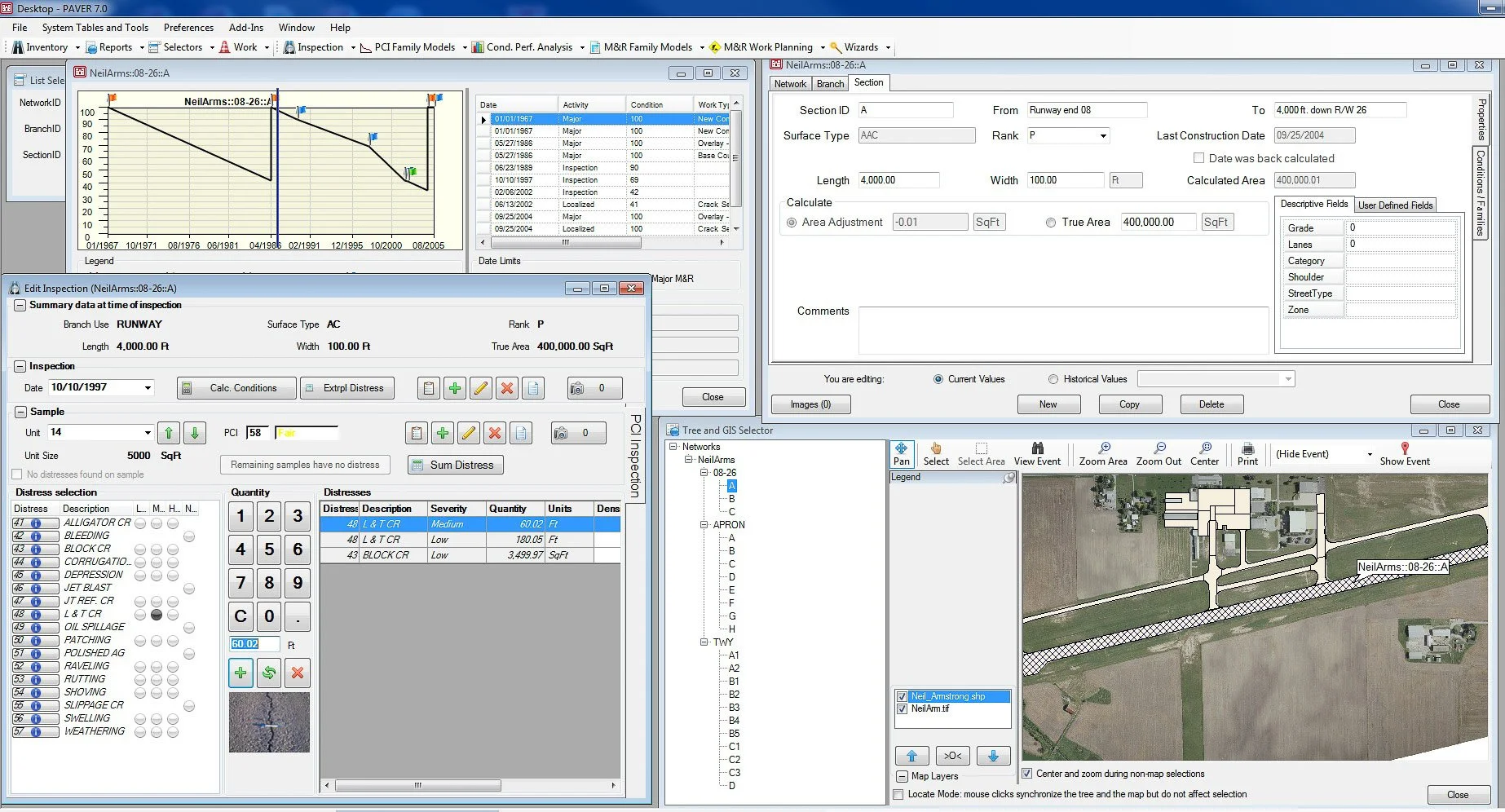
PAVER’s effectiveness relies on accurate field data to produce reliable results. Agencies can collect data through subjective visual inspections or, more commonly, use automated survey-collection technologies that capture roadway conditions more efficiently. Typical inputs include pavement distress, quantities, accurate roadway dimensions, traffic data, and asset data. Many agencies integrate PAVER with GIS mapping and mobile survey tools to improve data organization and accessibility.
Data Analysis and Decision-Making
Once data has been entered into the program, PAVER helps agencies evaluate maintenance options, forecast pavement performance, and model different budget scenarios. The software supports long-term planning by showing how pavement conditions may change over time under various budget allocations. This allows agencies to make more informed, data-driven decisions that balance roadway quality, risk, and available budgets.
The Key Benefits of PAVER/MicroPAVER
As one of the oldest platforms, PAVER (and MicroPAVER) has one of its biggest strengths in its long-established, industry-standard methodology. Built around the Pavement Condition Index (PCI), the system has been tested and validated for decades across a wide range of pavement networks. This consistency gives agencies confidence that decisions are being based on reliable, standardized data.
PAVER also provides strong analytic capabilities that support smarter, proactive infrastructure planning. The platform helps agencies evaluate different maintenance strategies, forecast pavement deterioration, and model the impact of different funding levels over time. These forecasting tools make it easier to prioritize projects, justify budgets, and extend the life of roadway assets while controlling long-term costs.
Another key advantage is scalability. PAVER can be used to manage everything from small college campus roadways to large municipal street networks and airport paving systems. Its flexibility allows organizations of different sizes to implement a pavement management strategy that fits their needs and their available resources.
Because of its long history and proven method, PAVER remains widely recognized and trusted throughout the pavement management industry. Public agencies, universities, airports, and military facilities continue to rely on the platform as a foundation for long-term asset management and data-driven decision-making.
PAVER / MicroPAVER Limitations and Challenges
While PAVER and MicroPAVER remain highly respected within the industry, they are not without some limitations. One major challenge is that the platform may require a significant investment of time and expertise to manage assets effectively. Accurate PCI evaluations depend on consistent inspections and properly trained personnel. This makes data quality a critical factor in the system’s success.
For some agencies, the software’s interface and workflow can feel a bit dated when compared to newer cloud-based pavement management platforms. Modern users often expect more streamlined dashboards, mobile accessibility, and automated integrations that may require additional customization within PAVER environments.
Another challenge is the reliance on regular and detailed data collection. Maintaining an up-to-date pavement inventory can become resource-intensive, especially for large roadway networks with limited staff or funding. Without consistent updates, forecasting accuracy and maintenance planning can quickly lose effectiveness.
Despite these challenges, many agencies continue to use PAVER because of its proven methodology, reliability, and strong analytical foundation. When paired with quality data collection and experienced support, the platform remains a valuable tool for long-term pavement management.
Usability and User Experience
A pavement management system is only as effective as its usability in daily operations. While PAVER and MicroPAVER are known for this analytical strength, the user experience can vary depending on an agency’s technical resources, staff training, and data management processes. Understanding how the platform operates in real-world workflows helps you determine whether it aligns with your agency’s operational needs and long-term pavement management goals.
Ease of Implementation
Implementing PAVER or MicroPAVER requires strong data and an organized setup process. Agencies typically need to:
Build or update pavement inventories
Prepare roadway and asset data before import
Train staff on PCI inspection methods and software workflows
Establish consistent data collection standards
Because of the platform’s structured methodology, training is necessary to ensure inspections and reporting remain accurate and consistent.
Day-to-Day Use
Once implemented, PAVER supports ongoing pavement inspections, database updates, and maintenance planning. Common tasks include:
Recording pavement distress information
Updating condition data after surveys
Running budget and maintenance scenarios
Generating reports for planning meetings
Some users find the interface less intuitive than newer cloud-based platforms, particularly when managing large datasets or navigating reporting functions.
Reporting and Output
One of PAVER’s strengths lies in its reporting capabilities. Agencies can generate:
Pavement condition summaries
Budget forecasting reports
Maintenance and rehabilitation recommendations
Long-term performance projections
These reports help public works departments communicate infrastructure needs, justify funding requests, and support data-driven discussions with stakeholders and decision-makers.
How Transmap Enhances PAVER
PAVER provides a strong foundation for pavement management, and Transmap helps agencies get even more value from the platform through improved data collection, integration, and training. Using modern survey technologies, GIS mapping, and streamlined workflows, Transmap helps improve the accuracy and consistency of pavement condition data.
Transmap also enhances reporting and visualization capabilities, helping agencies better understand roadway conditions and communicate infrastructure needs more effectively. At Transmap, we work closely with our clients (which include municipalities, counties, and engineering teams) to help them select and implement the pavement management system that best meets their needs.
By combining reliable data with industry expertise, Transmap helps organizations maximize the long-term value of their PAVER and MicroPAVER investment.
Is PAVER Right for Your Agency?
PAVER is a strong fit for airports, municipalities, universities, and DOTs that already have established pavement management programs and need a proven data-driven approach to long-term infrastructure planning. Its standardized PCI methodology and forecasting capabilities make it especially valuable for agencies managing large or complex pavement networks.
However, agencies looking for more modern cloud-based interfaces, simplified workflows, or highly automated data integration may also consider newer pavement management platforms. When evaluating PMS options, organizations should consider factors like network size, available staff resources, reporting needs, budget planning goals, and long-term data management requirements.
For many agencies, PAVER remains a trusted solution with a long history of supporting informed pavement management decisions.
Conclusion
For decades, PAVER and MicroPAVER have served as foundational tools for pavement management, helping agencies make more informed, data-driven infrastructure decisions. While the platform offers proven methodologies and strong forecasting capabilities, agencies must also consider the challenges of ongoing data collection, system management, and evolving technological expectations.
By pairing established systems like PAVER with modern survey technologies, GIS integration, and enhanced data workflows, agencies can improve efficiency and maximize the value of their pavement management programs. Transmap helps organizations strengthen these efforts by delivering the accurate, reliable data needed to support smarter long-term planning.
To learn more, or for PAVER client references, please contact us or call our main office in Columbus, OH at (614) 810–1235.